
Roof deck
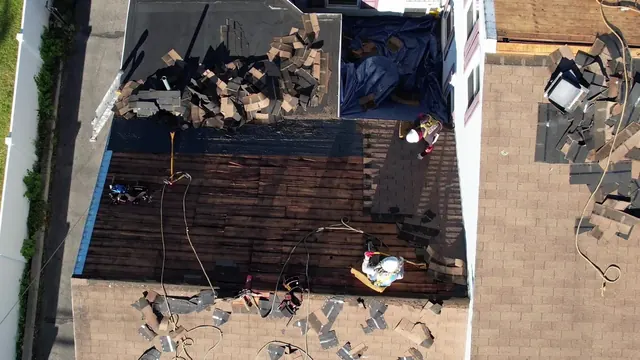
The OSB or plywood sheathing fastened to the rafters. Every other layer is nailed into it, so after a tear-off we walk the whole deck and replace soft, rotted or delaminated boards before anything goes on top.
Roof system
A roof that lasts is six layers installed in the right order. Turn the house, take the roof apart and see where each layer goes.
A roof that lasts is a system installed in the right order. Choose a layer to see what we install and what we check before it is covered.
The plywood the whole roof is fastened to. After the tear-off we walk it and replace soft or damaged boards before anything goes on top.
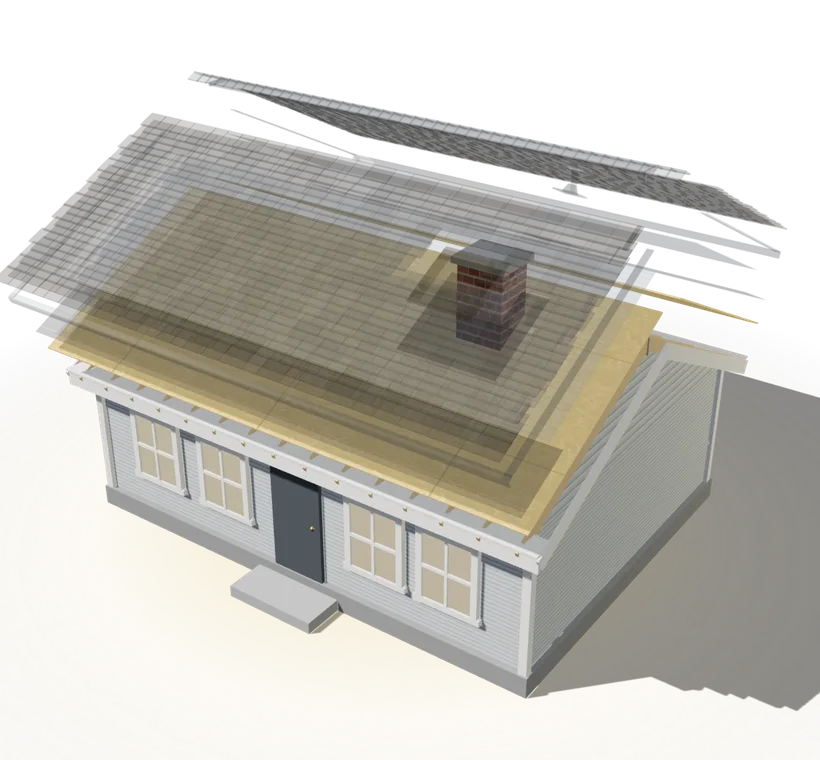
What we install on a full roof replacement, from the deck up.
The OSB or plywood sheathing fastened to the rafters. Every other layer is nailed into it, so after a tear-off we walk the whole deck and replace soft, rotted or delaminated boards before anything goes on top.
A self-adhering rubberized membrane installed at the eaves, in valleys and around chimneys, skylights and vents. It seals around nails and stops water that ice dams or wind-driven rain push under the shingles.
A synthetic, water-resistant sheet over the rest of the deck, lapped so water always runs over the course below. It keeps the deck dry during installation and is the second line of defense if a shingle fails.
Metal where the roof meets an edge or a wall: drip edge at the eaves and rakes, step and counter flashing at chimneys and walls, and boots around plumbing vents. Most leaks start at these joints.
A starter course along the edges, then architectural asphalt shingles laid in staggered courses and fastened in the pattern the manufacturer specifies. Their laminated layers give depth and shed water down the roof.
A ridge vent along the peak lets warm, moist attic air escape while soffit vents bring fresh air in. Ridge cap shingles cover the vent and finish the peak. Good airflow helps prevent ice dams and keeps the deck dry.
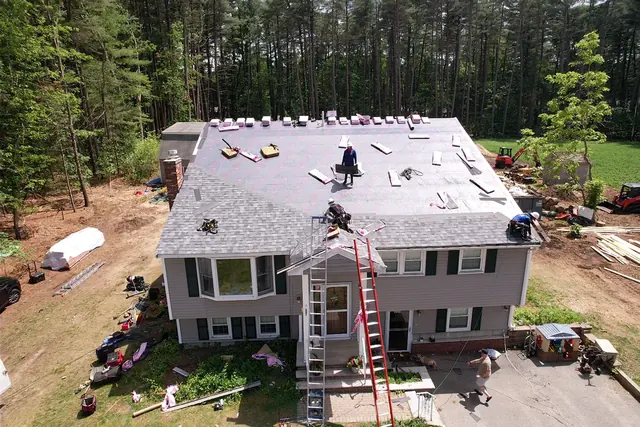
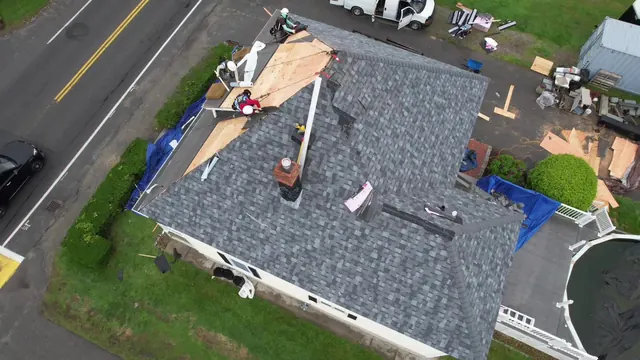
Each layer laps over the one below so water always runs downhill and outward. Installing a layer out of order, or skipping one, leaves a path for water that shingles alone cannot stop.
At the eaves, in valleys and around chimneys, skylights and other penetrations, where ice dams and wind-driven rain push water under the shingles.
We inspect all flashing and replace drip edge, pipe boots and any step or counter flashing that is worn, rusted or poorly installed.
Three short steps. We reply to every request personally, and for a leak or storm damage, calling is fastest.
Call the office(603) 404-1792